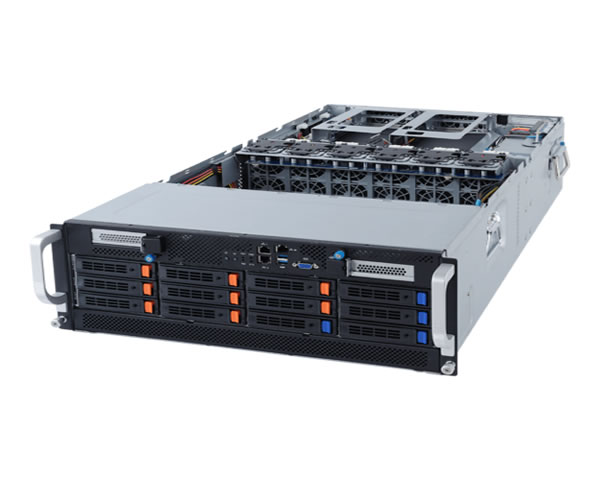
As financial services expand across borders, it has become a common practice for the financial industry to choose high-security servers located in Malaysia. This article focuses on the compliance and security considerations for the financial industry when selecting high-security servers in Malaysia, emphasizing both regulatory requirements and technical protection practices to assist decision-makers in developing deployment strategies that prioritize both security and compliance.
Why does the financial industry choose high-security servers in Malaysia?
Malaysia boasts a well-developed network infrastructure and regional connectivity, giving it a geographical advantage in the Asia-Pacific market. Financial institutions choose high-security servers in Malaysia to reduce cross-border latency and to leverage local data centers and security capabilities to counter network threats such as DDoS attacks, while also ensuring compliance and operational stability.
Compliance considerations: Local regulatory requirements and data sovereignty considerations
Financial institutions deploying high-security servers in Malaysia must comply with local financial regulations, anti-money laundering laws, and personal data protection statutes, such as the Personal Data Protection Act. Focus particularly on data sovereignty, customer privacy, and compliance with cross-border data transfer regulations. Conduct thorough legal assessments and include relevant provisions in contracts to ensure that data processing activities comply with legal requirements and can be audited accordingly.
Safety considerations: DDoS Protection and Network Isolation
DDoS protection is a core capability of high-security servers. Financial services require solutions that possess cleaning capabilities, distributed protection mechanisms, and the ability to scale on demand. At the same time, network segmentation and virtual private networks (VPNs/dedicated lines) should be used to isolate the internal and external networks, thereby reducing the risk of lateral spread and controlling the exposed surfaces.
Host and application security: System hardening and patch management
At the host level, minimal installation, access control, and regular patch updates should be implemented; at the application layer, code audits and WAF protection are necessary. The external interfaces utilize strong authentication and encrypted data transmission, with strict control over management permissions and the lifecycle of keys, ensuring that the services are reinforced to meet the risk requirements of the financial sector.
Monitoring, logging, and emergency response capabilities
Establish a comprehensive monitoring and logging system that covers network traffic, system events, and application logs to meet regulatory and auditing requirements. And establish incident response and recovery procedures that include alert levels, coordination mechanisms, and drill plans to ensure rapid recovery in the event of an attack or failure, while also maintaining traceable evidence.
Operational reliability: SLA, Backup, and Disaster Recovery Design
Financial services have high requirements for availability; therefore, it is essential to define clear SLA metrics (such as availability and recovery time objectives) and implement multi-site backup and off-site disaster recovery solutions. Regularly verify the integrity of backups and conduct drill tests for the switching process to ensure that business continuity can be maintained in the event of data center failures or regional incidents.
Qualifications of Partners and Key Points for Review
When selecting a hosting or cloud service provider, it is essential to review their compliance credentials, the physical security of their data centers, and any third-party security assessments and audit reports (such as those related to ISO/PCI standards). Additionally, the contract should clearly define the responsibilities, data processing terms, and emergency support capabilities to ensure long-term compliance and control.
Summary and Recommendations
When the financial industry chooses high-security servers in Malaysia, it is essential to strike a balance between compliance and security: First, complete the legal and compliance assessments. Then, focus on technical aspects such as DDoS protection, network isolation, host and application hardening, as well as logging and emergency response mechanisms. Finally, ensure sustainable operations by establishing clear SLAs and verifying the qualifications of suppliers. It is recommended to work in collaboration with the legal, compliance, and security teams and to conduct regular reviews.
- Latest articles
- Improving the Efficiency of Cross-Border Work: A Case Study on the Deployment of Servers in Cambodia for Returning Employees in China
- Recommendations for Secure Isolation and Access Control of Data Servers in Cambodia within a Multi-Tenant Environment
- How to Join a Korean Support Group and Participate in Event Organization and Fund Management
- Which server is better for Hong Kong or the United States? Key considerations for deploying SEO and geolocation optimization strategies
- Comparison of Features, Speed, Accuracy, and Historical Data for Korean Original IP Lookup Websites
- Recommendations for Network Architecture Design and Redundancy Solutions for Alibaba Cloud’s Singapore CN2
- How to choose a Singapore-based cloud server for e-commerce and streaming services to ensure stability during peak periods?
- In-depth analysis of the effectiveness of website optimization for the US market and implementation guidelines
- Key Points of the Hosting Contract and Service Commitments for the Hong Kong Site Group from a Long-Term Operations Perspective
- Popular tags
-

analysis and recommendation of malaysian server supply
this article provides an in-depth analysis of malaysia’s server supply, recommends server solutions suitable for different needs, and provides reliable solutions for your business. -
discover the secrets behind malaysia’s server foundries
explore the background, advantages and impact of malaysian server foundries on the global market. -
how to quickly determine the difference in hardware and usage through the malaysian server letters
this article introduces how to quickly determine the focus and applicable uses of hardware through the letters in malaysian server names, including the meanings of common letters, prefix and suffix rules, storage and acceleration identification methods, as well as practical judgment processes and verification suggestions.